SEO Marketing: Using Search as a Growth Channel
SEO on its own is a set of technical and content practices: crawling, indexing, on-page signals, content, links. SEO marketing is different -- it's treating organic search as a managed, budgeted marketing channel, with goals, a plan, and a way to measure whether it worked. This guide covers how to build that strategy, where it fits by business goal, how it compares to paid search, what to budget and measure, and how to evaluate an agency if you're considering hiring one.
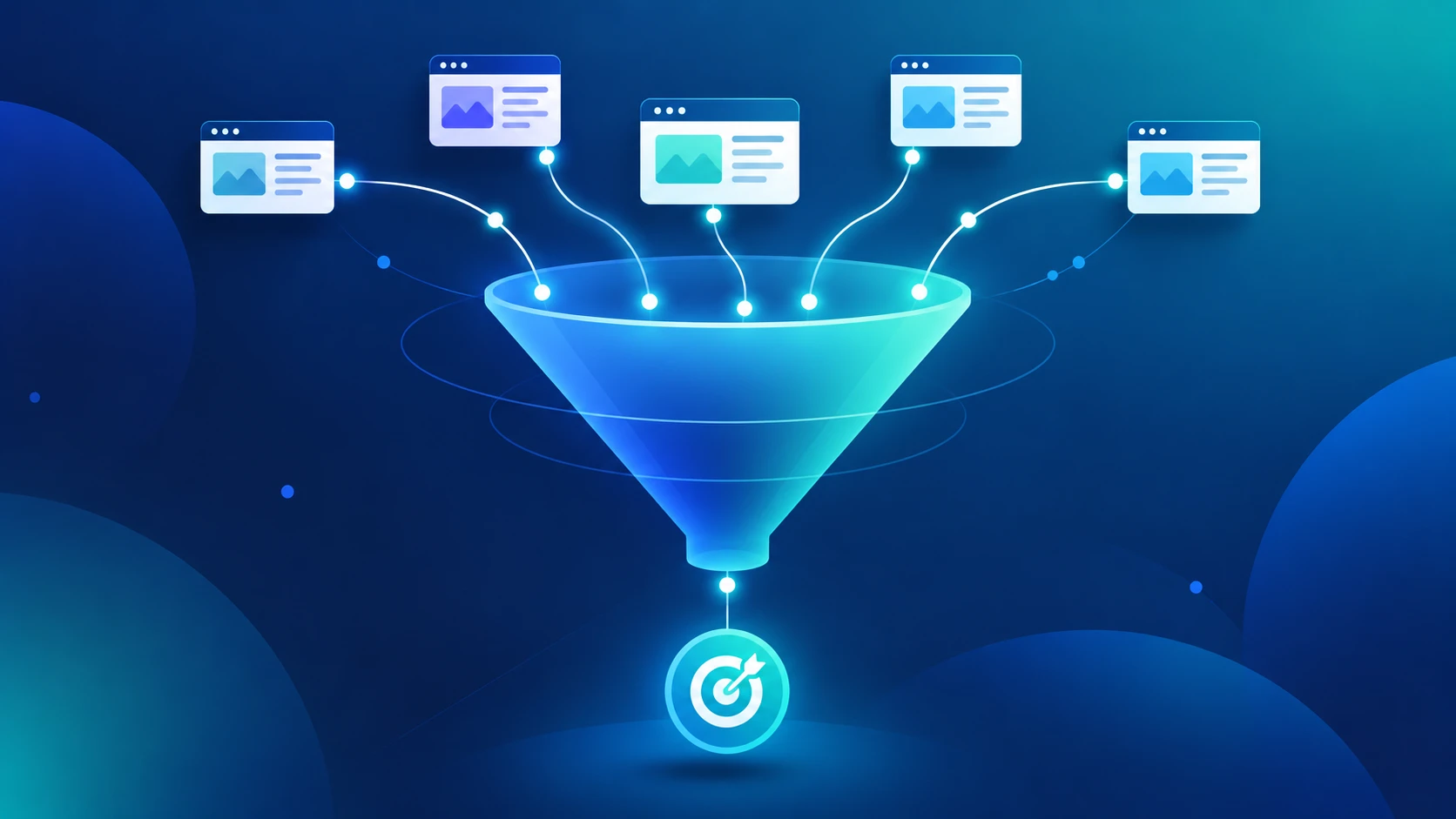
What Is SEO Marketing?
SEO marketing is the practice of treating organic search as a managed, budgeted marketing channel, not just a set of technical and content practices. SEO itself covers what you do to help pages rank: technical health, on-page signals, content, and links (see our What Is SEO guide for the mechanics). SEO marketing is the layer above that: deciding how search fits into the overall growth plan, what you're trying to achieve through it, how much you're investing, and how you'll know whether it worked.
The distinction matters because it's possible to do SEO correctly in a technical sense -- good titles, clean code, solid content -- while still failing as a marketing channel, because nobody set a goal, a budget, or a way to measure success. SEO marketing treats search the same way you'd treat any other channel: with a strategy, a plan, and accountability for results.
Building an SEO Marketing Strategy
-
Setting Goals Before Tactics
Before picking keywords or planning content, decide what you actually want SEO to do for the business: more signups, more demo requests, more revenue from a specific product line, more brand awareness in a category. A goal like "rank higher" isn't a business goal, it's a proxy for one, and proxies without an underlying business outcome tend to produce traffic that doesn't convert.
-
Mapping SEO to the Funnel
SEO can target every stage of a funnel, not just the bottom. Top-of-funnel content (broad, informational searches) builds awareness before someone is ready to buy. Middle-of-funnel content (comparisons, "best X for Y") helps someone evaluate options. Bottom-of-funnel content (product or category terms, "X pricing," "X vs Y") captures people close to a decision. A strategy that only targets bottom-of-funnel terms misses the much larger pool of people who haven't started comparing yet; one that only targets top-of-funnel terms can drive traffic that never converts.
-
Running It as Campaigns, Not One-Offs
SEO often takes months to build meaningful results, especially for competitive topics, which makes it easy to treat as a background task rather than a planned effort. Running SEO as a campaign, with a defined scope, a content or technical focus, a timeline, and a way to check progress, keeps it accountable the way a paid campaign naturally is. That doesn't mean rigid sprints; it means SEO work should map to specific objectives with a start and a checkpoint, not run indefinitely with no review.
SEO by Business Goal
-
SEO for Customer Acquisition
When the goal is new customers rather than general traffic, prioritize keywords and content tied to problems your product actually solves, not just broad category terms. Content that ranks but doesn't match what a buyer is actually trying to do (see our guide on search intent) brings visitors who leave without converting.
-
SEO for Lead Generation
Lead-gen SEO usually means pairing informational content that ranks with a clear, low-friction next step -- a gated resource, a demo request, a newsletter -- placed where it fits the content naturally rather than interrupting it. The content still has to be genuinely useful on its own; a page that reads as a thin wrapper around a lead form tends to underperform both for ranking and for conversion.
-
SEO for Ecommerce
Ecommerce SEO adds product and category pages to the mix, which bring their own technical considerations: faceted navigation and filtering can create near-duplicate URLs, product descriptions pulled from manufacturer feeds are often duplicated across competing sites, and seasonal or out-of-stock products need a clear policy (redirect, 404, or keep indexed) rather than being handled ad hoc.
-
SEO for Startups
Startups often have the least to work with: a new or relatively unknown site, limited content history, and few established links. The practical approach is usually narrower topical focus rather than broad competition -- picking a smaller set of specific, lower-competition topics where the startup can realistically rank, rather than competing directly against established sites on the highest-volume terms from day one.
SEO vs. PPC
SEO and PPC (paid search) both put you in front of people searching, but the tradeoffs are different enough that treating them as interchangeable is a mistake either way.
PPC gets you placement immediately, the moment a campaign goes live, but that placement stops the moment you stop paying. SEO takes longer to build -- often months before meaningful rankings for competitive terms -- but a ranking page keeps bringing traffic without an ongoing cost per click.
Neither is simply "better." PPC can be useful for a new product launch, a time-sensitive promotion, or testing which keywords convert before investing heavily in SEO content. SEO can be useful when the goal is to build an organic acquisition channel around content that remains relevant over time. Many SEO marketing strategies run both: PPC for immediate, measurable volume while SEO content builds toward replacing some of that paid spend over time.
Quick check: SEO or PPC first?
A directional gut-check based on three factors from this guide, not a substitute for your own numbers.
1. What's the timeline?
Budgeting, ROI & KPIs
-
SEO Budgeting: What to Account For
An SEO budget usually covers more than "writing content": technical fixes and development time, content creation (writing, editing, sometimes design or data for original research), tools (keyword research, rank tracking, technical auditing), and often link building or digital PR if that's part of the strategy. Underbudgeting any one of these can limit what the rest of the strategy can achieve -- content without the technical work to support it, or technical work without enough useful content, can both leave gaps.
-
Measuring SEO ROI
SEO ROI means comparing what the channel cost (time, tools, content, any paid help) against the value of what it generated, measured in the business outcome that actually matters -- revenue, qualified leads, signups -- not just traffic or rankings. Because SEO compounds, ROI calculated too early (a few months in) usually looks worse than the eventual return once content and authority build up, which is part of why SEO is harder to justify quarter-to-quarter than a channel like PPC with immediate, attributable numbers.
-
SEO KPIs That Actually Matter
Rankings and traffic are visible, but they're inputs, not outcomes. The KPIs worth tracking against goals are usually: organic traffic to pages that actually matter for the business (not every page), conversions or leads from organic traffic specifically, keyword rankings for terms tied to real business intent (not vanity terms), and organic revenue or pipeline where that's measurable. Tracking rankings alone without tying them to a downstream outcome is how SEO gets reported as "working" while the business doesn't feel it.
Local & International SEO Marketing
-
Local SEO Marketing
Local SEO marketing targets searches tied to a specific place -- "near me" queries, city or neighborhood modifiers, map-pack results. It depends heavily on an accurate and complete Google Business Profile, clear location information, and genuinely useful location-specific content rather than one generic page serving every location. A business with multiple locations may use dedicated pages for locations when each location has enough unique, useful information to justify one, rather than a single page trying to cover all of them.
-
International SEO Marketing
International SEO marketing targets multiple countries or languages, and it introduces technical requirements that don't exist for a single-market site: hreflang tags to tell search engines which page serves which language or region, a URL structure decision (subdirectories, subdomains, or separate domains per market) that's worth making deliberately, since changing it later can mean significant migration and maintenance work, and genuinely localized content and keyword research per market rather than a direct translation of the same content, since search behavior and terminology both vary by region.
SEO Marketing Services & Agencies
-
What They Usually Do
SEO marketing services and agencies typically combine strategy, content, technical work, and reporting into an ongoing engagement -- planning the approach, producing or guiding content, flagging technical issues, and tracking progress against goals. The scope varies: some providers offer a narrow, specific service (technical audits only, or content only), while others run a full strategic campaign across everything in this guide.
-
Agency vs. Service vs. Consultant
These terms get used inconsistently across the industry, so it's worth judging by what's actually offered rather than the label. An "agency" usually implies a team handling multiple workstreams (content, technical, sometimes links) under one engagement. A "service" more often means a narrower, more transactional offering -- a specific deliverable rather than an ongoing strategic relationship. A "consultant" is typically one person providing strategy and guidance, with execution handled in-house or by a separate provider. None of these are formal, enforced definitions, so the actual scope of work matters more than which term a provider uses for themselves.
-
What to Ask Before Hiring
- What's the actual scope: strategy only, content, technical work, or all three?
- Can they show measurable results from past engagements, not just a client list?
- How do they report progress, and against what KPIs?
- Who does the actual work: the person you're talking to, or a team you won't interact with directly?
- What's the expected timeline before meaningful results, and how do they define "results"?
-
Pricing
Pricing varies enormously by scope, market, and whether the engagement includes content production, technical work, or both, so there's no single number worth quoting here as a benchmark. Be skeptical of a price that seems low for a broad, "we'll do everything" scope; SEO marketing work that actually covers strategy, content, and technical fixes takes real time, and a bargain price usually means one of those is being skipped or handled by an automated, unreviewed process.
-
Red Flags
- Guarantees of a specific ranking position or timeline -- no one controls the algorithm closely enough to guarantee this
- No clear reporting against goals, just a monthly summary of generic metrics
- Pressure to sign a long-term contract before any work has started
- Vague answers about who actually does the work
- Reliance on tactics that cross into manipulative link building (see our Link Building guide for what to avoid there)
SEO and Other Channels
-
SEO + Content Marketing
SEO and content marketing overlap heavily but aren't the same thing: content marketing is the broader practice of creating content for an audience across any channel, while SEO is one of the ways that content gets discovered. See our Content Marketing guide for how to build a content system; the SEO-specific piece is making sure that content is built around what people are actually searching for, not just what the business wants to say.
-
SEO + Brand Building
SEO and brand building can reinforce each other: consistent visibility in search can build recognition over time, while a stronger brand can lead to more branded searches and clicks. Those outcomes are useful for the business, even though they shouldn't be treated as a simple direct ranking signal. Neither replaces the other; a well-ranked page from an unrecognized brand still has to earn the click and the trust once someone's looking at the result.
-
AI Search Marketing
AI search marketing extends the same thinking to how AI tools and generative search surfaces discover and describe a brand, not just where a page ranks in traditional search. See our Generative Engine Optimization guide and Why AI Visibility Matters guide for the specifics; the short version is that the same fundamentals still matter: useful, accurate, accessible content remains important for both traditional search and AI-powered search features, so the two aren't competing priorities.
How RankAnalyze Fits
The strategy decisions in this guide -- goals, budget, channel mix, KPI definitions -- are calls only you can make for your business; no tool makes them for you. Where RankAnalyze helps is the execution and measurement layer underneath those decisions: the Ranking Audit checks a page against on-page signals for a given focus keyword, the keyword difficulty score factors in referring domains, and it shows exactly how ChatGPT, Claude, Gemini, Perplexity and Copilot describe your brand today -- which feeds directly into the AI-visibility side of measurement this guide covers, not the strategic decisions themselves.
See exactly how ChatGPT, Claude, Gemini, Perplexity and Copilot describe you today.
Frequently Asked Questions
What is SEO marketing?
SEO marketing is the practice of using organic search as a managed marketing channel, with goals, a budget, and KPIs, not just the technical and content practices of SEO itself. See our What Is SEO guide for how the underlying mechanics work.
What does an SEO marketing strategy include?
Typically: clear goals tied to business outcomes, keyword and topic research mapped to the funnel, a content and technical plan, a budget, and KPIs to measure whether it's working.
Is SEO better than PPC?
Neither is simply better; they solve different problems. PPC delivers immediate, stoppable placement; SEO takes longer to build but keeps generating traffic without an ongoing cost per click. Many strategies use both.
How much should I budget for SEO marketing?
There's no fixed number -- budgets vary by scope, market, and whether content, technical work, and link building are all included. Underbudgeting any one of these tends to cap the results of the rest.
What KPIs should I track for SEO marketing?
Rankings and traffic are useful inputs, but the KPIs that matter most tie back to business outcomes: organic conversions or leads, organic revenue or pipeline where measurable, and rankings specifically for terms tied to real business intent.
What is the difference between SEO and SEO marketing?
SEO is the practice of improving a site's technical health, content, and links so it can rank. SEO marketing is the broader practice of treating organic search as a managed channel -- strategy, budget, measurement -- built on top of that SEO work.
What is the difference between an SEO marketing agency and an SEO consultant?
Mostly structure, not a formal distinction. An agency usually implies a team covering multiple workstreams; a consultant is typically one person providing strategy, with execution handled elsewhere. Judge any provider by what they actually deliver rather than the label they use.
See exactly how ChatGPT, Claude, Gemini, Perplexity and Copilot describe you today.